Why the Brighter Font is Defining the New Era of Retro-Modern Branding
In the ever-evolving digital marketplace, the visual language of a brand is its most critical handshake. For graphic designers, Print on Demand (POD) entrepreneurs, and small business owners, the choice of typography is no longer a mere afterthought—it is a strategic decision that defines market positioning. As consumer preferences shift toward authenticity and nostalgia, there has been a resurgence of vintage aesthetics. However, the modern market demands more than just throwback designs; it requires a synthesis of the past and the present. This is precisely where the Brighter typeface distinguishes itself. It is not simply a font; it is a design tool engineered to bridge the gap between the warm, nostalgic charm of the 70s and 80s and the crisp, functional requirements of contemporary digital commerce.
The Psychology of Nostalgia and Modern Clarity
To understand the utility of Brighter, one must first understand the psychological current driving current design trends. We are witnessing a period of "digital fatigue," where audiences crave the warmth and tangibility of the past. However, unlike previous eras where retro meant gritty or distressed, the current trend favors a "clean vintage" aesthetic. Consumers want the feeling of nostalgia without sacrificing the legibility and polish expected of high-end brands.
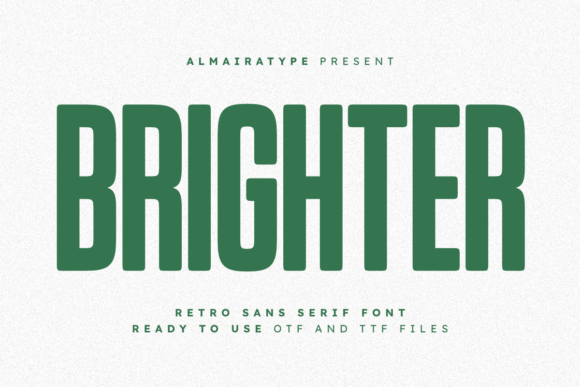
Brighter addresses this specific market need. It is a bold, retro sans-serif that captures the essence of vintage typography through its structure—tall, solid, and commanding—while utilizing smooth, slightly rounded edges to soften the impact. This creates a visual paradox that is incredibly effective in marketing: it is authoritative yet approachable. For a clothing brand or a digital creator, this means you can evoke the carefree spirit of a retro summer while maintaining the professional credibility required to close a sale. It is the typographic equivalent of a classic muscle car with a modern electric engine; the silhouette is familiar, but the performance is entirely current.
Optimizing Workflows for the Creator Economy
The relevance of a typeface today is often measured by its versatility across different production pipelines. The modern creative workflow is rarely linear; a design might start as a digital concept for a website header, transition into a vector graphic for a poster, and finally materialize as a physical product via a heat press or a Cricut machine. Brighter has been designed with this fluidity in mind.
For the growing community of craft enthusiasts using cutting machines like Cricut and Silhouette, font selection is a technical hurdle as much as an aesthetic one. Fonts with overly thin strokes, excessive kerning, or sharp, jagged points often result in "weed" issues during the vinyl cutting process, leading to wasted material and time. The construction of Brighter—characterized by its solid structure and smooth contours—translates exceptionally well to physical media. It minimizes production errors while ensuring that the final product retains high readability. This makes it an indispensable asset for entrepreneurs who need to move quickly from concept to physical merchandise without compromising on quality.
Strategic Application in Branding and Merchandise
Why are professionals and entrepreneurs paying such close attention to this typeface? The answer lies in its performance in high-impact visual environments. In the realm of Print on Demand and merchandise, the "glance test" is paramount. A t-shirt design or a poster has only a fraction of a second to capture a consumer's attention while scrolling through a feed.
Brighter excels in this environment because it commands attention without being aggressive. Its tall stature provides a vertical momentum that draws the eye upward, creating a sense of energy and optimism. This makes it particularly potent for:
- Trendy Apparel: It fits perfectly into the current "athleisure" and streetwear aesthetic, where bold, clean typography is king.
- Brand Identity: It offers a unique stylistic flair that helps startups distinguish themselves from the sea of geometric sans-serifs that have dominated the tech sector for the last decade.
- Headlines and Posters: Its excellent readability ensures that the message is communicated instantly, even in cluttered visual environments.
Furthermore, the font’s versatility allows it to adapt to various sub-niches. Paired with earth tones and textures, it feels organic and artisanal. Paired with neon gradients and stark backgrounds, it feels futuristic and electric. This adaptability allows creators to use a single typeface family to build a cohesive yet diverse brand ecosystem.
Meeting the Evolving Expectations of the Market
The digital landscape is maturing, and with it, consumer expectations are rising. The "good enough" era of design is over. Audiences are becoming more visually literate, capable of distinguishing between a generic template and a thoughtful design. This shift has forced freelancers and marketers to rethink their assets.
Using generic, overused fonts signals a lack of effort or distinctiveness. Conversely, using overly complex or decorative fonts can alienate an audience by sacrificing clarity. Brighter occupies the "Goldilocks" zone of design. It possesses a distinct personality that elevates a project from amateur to professional, yet it retains the neutrality required to let the message speak for itself.
This changing preference is also driven by the need for cross-platform consistency. A brand today exists on a website, a mobile app, a physical business card, and a social media video. Brighter maintains its structural integrity and stylistic charm across all these mediums, ensuring that a brand’s voice remains consistent whether it is viewed on a 4K monitor or printed on a cotton t-shirt.
Conclusion: A Tool for the Forward-Thinking Creator
In conclusion, Brighter is more than just a collection of glyphs; it is a response to the current cultural and commercial zeitgeist. It acknowledges our love for the past while embracing the precision of the future. For the graphic designer, it offers a robust tool for creating high-impact visuals. For the POD entrepreneur, it offers reliability and marketability. For the crafter, it offers ease of use and professional results.
As the lines between digital and physical products continue to blur, tools that facilitate seamless creation across both realms will become increasingly valuable. By integrating Brighter into your workflow, you are not just choosing a font; you are aligning your creative output with the aesthetic demands of a sophisticated, nostalgia-loving audience. It is a bold step toward creating work that is not only seen but remembered.