Evaluating Blush: A Bold Condensed Font for High-Impact Design
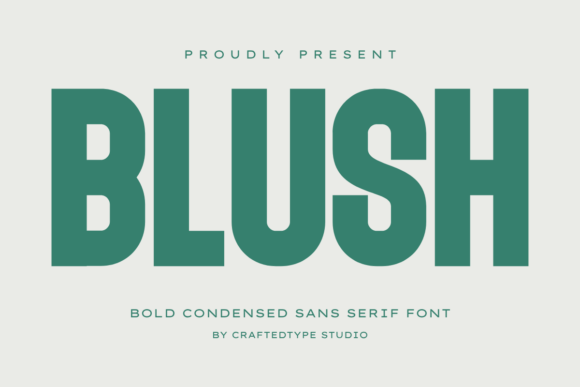
In the crowded landscape of digital typography, selecting a typeface that balances aesthetic impact with practical versatility is a critical decision for designers and creators. Blush enters this space as a bold condensed sans serif font, engineered specifically to deliver a strong, striking, and modern aesthetic. Its core identity is built upon exceptionally solid, tall, and narrow geometric letterforms, creating a display typeface that prioritizes maximum legibility and structural presence. This makes it a candidate for projects where visual weight and clarity are non-negotiable, such as heavy headers, editorial layouts, and impactful branding. Understanding its specific characteristics helps determine if it aligns with your project's technical and creative requirements.
Core Characteristics and Design Philosophy
The distinct nature of Blush is rooted in its geometric construction and condensed proportions. Unlike more traditional or ornate typefaces, its approach is industrial and minimalist. The letterforms are designed to be structurally refined with perfectly clean vectors, a feature that speaks directly to both digital and physical production workflows. This clean vectorization is not merely an aesthetic choice but a functional one, ensuring smooth, error-free rendering across various outputs.
For the thriving Print on Demand (POD) marketplace, this technical precision is particularly valuable. Designs for custom apparel, bold t-shirt layouts, statement hoodies, stickers, mugs, and commercial posters require fonts that reproduce cleanly at various scales. Blush's condensed nature allows for more text to fit into constrained spaces—like a mug wrap or a sticker border—without sacrificing readability. Its bold weight ensures the message remains the focal point, which is essential in competitive visual environments like online marketplaces or social media feeds.
Practical Applications and Workflow Integration
Beyond POD, Blush serves as a tool for professional graphic designers working on corporate logotypes, social media graphics, and promotional banners. The font's inherent authority makes it suitable for brands aiming to project confidence and modernity. However, its suitability depends on the brand's voice. A luxury brand seeking elegance might find Blush too utilitarian, while a tech startup or a fitness brand could find its boldness perfectly aligned with their identity.
A significant practical consideration is its optimization for hobbyist cutting machines like Cricut and Silhouette. The clean vectors mentioned earlier are critical here. Fonts with complex curves, thin strokes, or intricate details often cause issues with cutting software, leading to jagged edges or material tears. Blush's design mitigates this, making it a reliable choice for crafters creating vinyl decals, heat transfers, or paper crafts. This cross-compatibility between professional design software and hobbyist platforms is a notable strength, expanding its utility beyond a single niche.
Comparing Blush to Other Typographic Approaches
When evaluating Blush, it's helpful to consider the broader categories it competes with. Other condensed sans serifs exist, but they may vary in x-height, stroke contrast, or overall geometric rigor. Some might offer more stylistic alternates or a wider range of weights, which could be a deciding factor for projects requiring extensive typographic hierarchy. Blush, with its focus on a single, powerful aesthetic, trades breadth for depth of impact.
Compared to serif typefaces or script fonts, Blush occupies a different functional space. Serifs often convey tradition and readability in long-form text, while scripts add personality but can sacrifice legibility at small sizes or from a distance. Blush is unequivocally a display font, meant for headlines and short, impactful statements. Using it for body copy would likely be detrimental to readability. Therefore, the decision isn't just about Blush versus another bold font, but about choosing the right font category for the content's role.
Another comparison point is with variable font technology. While Blush is provided in static OTF and TTF formats, some modern type families offer a single file with adjustable weight, width, and slant axes. Variable fonts provide immense flexibility for responsive design but can have a steeper learning curve and may present compatibility issues with older software. Blush's static files, being fully PUA encoded, offer immediate, native access to every glyph across both advanced design platforms and standard text software without specialized menus. This plug-and-play reliability can be a decisive advantage for users who prioritize straightforward workflow over granular typographic control.
Decision Factors: When is Blush the Right Choice?
Blush is likely a strong candidate if your project's primary goal is to command attention with a clean, modern, and authoritative voice. It excels in scenarios where text must be legible from a distance or at a glance—think event posters, product packaging, or website hero sections. Its compatibility with cutting machines makes it a practical asset for crafters and small business owners in the handmade or POD space.
However, consider other options if your design requires nuanced typographic expression. Projects that need multiple weights (light, regular, medium, bold, black) for a detailed typographic hierarchy might find Blush's single bold offering limiting. Similarly, if the brand aesthetic is soft, whimsical, or highly ornamental, a condensed geometric sans serif will likely feel incongruous. For long-form reading, such as articles or reports, a more traditional text-optimized typeface is essential.
Final Considerations for an Informed Choice
The download package includes both OTF and TTF formats, ensuring broad compatibility with operating systems and design software. The full PUA encoding is a technical detail that has practical benefits: it means all special characters, ligatures, and glyphs are directly accessible without requiring advanced software features or font panel exploration. This lowers the barrier to using the font's full potential, especially for those using simpler design tools or word processors.
Ultimately, selecting Blush is a decision about embracing a specific design philosophy: one that values boldness, clarity, and modern minimalism. It is not a universal solution but a specialized tool. By assessing your project's audience, required applications, and desired emotional tone, you can determine if its strengths align with your needs. In the right context, it can elevate a design with undeniable presence; in the wrong context, it may feel restrictive. The key is to match the tool to the task, ensuring your typographic choices support your overall communication goals effectively.