Magora: Bridging the Gap Between Digital Precision and Artistic Grit in Modern Typography
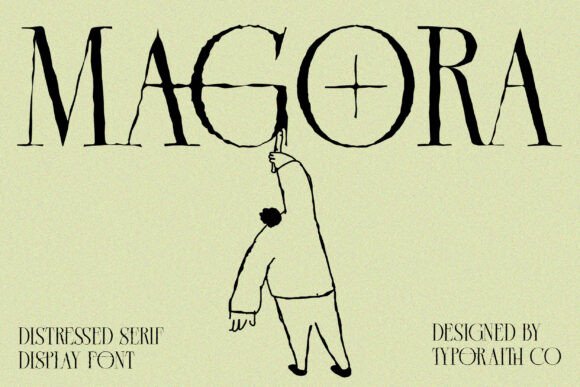
In the contemporary landscape of design, we are witnessing a significant paradigm shift. For years, the digital world was dominated by the pursuit of perfection—vector paths were smoothed to mathematical certainty, and sans-serif minimalism reigned supreme. However, a new wave of creative professionals, ranging from fashion editorial designers to luxury brand strategists, is demanding a return to texture, emotion, and raw authenticity. Enter Magora, a unique display serif font that does not merely sit on a canvas but commands it. By blending modern elegance with raw, distressed details, Magora represents a pivotal moment in typography where the digital meets the analog.
The Renaissance of the "Imperfect" Serif
For professionals navigating the current market, the relevance of Magora lies in its ability to solve a pervasive problem: sterility. As brands strive to connect with audiences on a deeper, more human level, the overly polished aesthetics of the last decade are beginning to feel impersonal. Magora answers this by offering sharp serif forms disrupted by artistic imperfections and handcrafted textures. It is not just a typeface; it is a visual statement that acknowledges the beauty in the broken and the bold.
This trend toward "imperfection" is not accidental. It reflects a broader consumer and business trend where audiences value transparency and authenticity over curated perfection. In the realm of creative branding, this means typography must do more than convey information; it must evoke a visceral reaction. Magora delivers this with a bold visual presence that feels both timeless and avant-garde.
Visual Psychology and Brand Identity
Why are creators and entrepreneurs paying such close attention to fonts like Magora? The answer lies in the psychology of differentiation. In a saturated digital ecosystem, a brand has roughly three seconds to capture attention. Standard serif fonts, while legible, often fail to stop the scroll. Magora, with its experimental atmosphere and gothic undertones, acts as an immediate visual hook.
Consider the changing expectations of the luxury market. Modern luxury is no longer just about pristine white gloves and gold leaf; it is increasingly defined by "streetwear" sensibilities, raw edges, and subculture aesthetics. Magora fits perfectly into this evolving definition. Its sharp, aggressive serifs suggest authority and tradition, while its distressed textures suggest rebellion and edge. This duality makes it an incredibly powerful tool for designers who want to communicate a brand that is both established and disruptive.
Practical Applications in Modern Workflows
For the freelancer or the in-house creative, the utility of a font is defined by its versatility within specific high-impact scenarios. Magora is not designed for body copy in a legal document; it is engineered for the marquee moments in a project. Here is how professionals are integrating Magora into their workflows to elevate their deliverables:
- Fashion Editorials and Lookbooks: The fashion industry thrives on mood. Magora’s sharp forms create a dramatic hierarchy that pairs exceptionally well with high-contrast photography. It adds a layer of cinematic tension to headlines that standard sans-serifs cannot achieve.
- Album Covers and Cinematic Titles: In the entertainment sector, the title art must promise an experience. The handcrafted textures of Magora suggest a story with depth, grit, and emotion, making it ideal for genres ranging from indie rock to dark electronic music and psychological thrillers.
- Luxury Packaging and Posters: Physical products require tactile branding. When printed on textured paper stock or embossed on packaging, the distressed details of Magora come alive, creating a sensory experience that bridges the gap between the visual and the tactile.
Adapting to the Evolving Design Workflow
The rise of Magora also speaks to the changing nature of design tools and workflows. With the advent of advanced digital printing and high-resolution Retina displays, the nuance of a distressed font is no longer lost in pixelation. Designers can now confidently use complex textures like those found in Magora without sacrificing readability on modern devices.
Furthermore, the design process itself has become more fluid. The "experimental" nature of Magora encourages a more intuitive workflow. Instead of starting with a rigid grid, designers can use the font's inherent personality to dictate the layout. The "artistic imperfections" serve as creative prompts, allowing the typography to influence the composition of the poster or the layout of the website. This shifts the workflow from a purely technical exercise to a more expressive, artistic endeavor.
The Business Case for Typographic Personality
From a business perspective, investing in a typeface like Magora is an investment in brand equity. In the current market, generic branding is a liability. Consumers, particularly Millennials and Gen Z, are drawn to brands that exhibit distinct personality traits. Typography is the voice of the brand, and Magora speaks in a voice that is confident, mysterious, and unapologetically bold.
For marketing professionals, this translates to higher engagement rates. A poster utilizing Magora is more likely to be photographed and shared on social media than one using a standard system font. The font itself becomes a content asset, contributing to the viral potential of the campaign. It signals to the audience that the brand cares about aesthetic details and is willing to step outside the mainstream to express its identity.
Navigating the "Modern Gothic" Aesthetic
We are seeing a resurgence of the "Modern Gothic" aesthetic across various industries, from interior design to digital art. This style combines the dark, moody elements of traditional gothic art with sleek, contemporary minimalism. Magora is the typographic embodiment of this movement.
It brings a mysterious atmosphere to projects without resorting to caricature. The font maintains a level of sophistication that keeps it grounded in high-end design, avoiding the trap of looking "cheap" or "grungy." For designers working on artistic projects or experimental layouts, Magora provides the necessary vocabulary to explore these darker, more complex themes while maintaining professional polish.
Conclusion: The Future of Expressive Typography
As we look toward the future of creative branding and design, it is clear that the demand for personality-driven typography will only grow. The era of the "invisible" font is waning, replaced by a desire for typefaces that contribute to the narrative. Magora stands at the forefront of this movement, offering a sophisticated solution for those who find standard fonts lacking in soul.
Whether you are a graphic designer curating a brand identity, a marketer launching a bold campaign, or an artist seeking to make a statement, Magora offers a unique blend of modern elegance and raw, distressed character. It proves that in the world of design, true sophistication often lies in the details—and sometimes, in the deliberate, beautiful imperfections.