The Enduring Allure of Serif Typography: A Deep Dive into the Proyale Font
In the vast landscape of digital and print design, typography serves as the silent ambassador of a brand’s voice. While sans-serif fonts have dominated the web for their screen-friendly legibility, there remains a powerful, unshakeable demand for typefaces that convey history, sophistication, and gravity. Among the myriad options available to designers today, Proyale stands out as a paragon of classic elegance. It is not merely a collection of letters; it is a design tool engineered to evoke a specific emotional response—one of luxury, tradition, and refined taste. This article explores the technical and aesthetic qualities of the Proyale font, its practical applications across various industries, and the nuances of integrating such a classic serif into modern design workflows.
Defining the Visual Character of Proyale
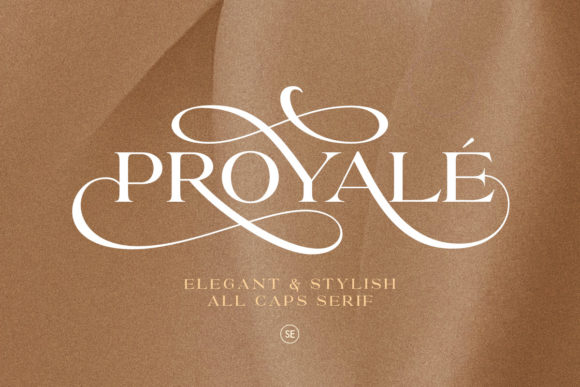
To understand why a font works, one must first deconstruct its anatomy. The Proyale typeface belongs to the serif family, characterized by small lines or strokes regularly attached to the end of a larger stroke in a letter. However, Proyale distinguishes itself through a specific balance of contrast and proportion. It typically features high-contrast strokes—meaning the difference between the thick and thin parts of the letter is significant—combined with elegant, bracketed serifs. This design choice creates a rhythm that guides the eye effortlessly across the page.
The curvature of letters in Proyale often draws inspiration from transitional and modern serif styles. The terminals (the end of a stroke that lacks a serif) are usually crisp and unbracketed, giving the font a sharp, tailored appearance. Unlike the more robust and sturdy "slab serifs" often used for heavy industrial branding, Proyale whispers rather than shouts. Its x-height—the height of lowercase letters like 'x' or 'a'—is often carefully calibrated to maintain legibility without sacrificing the airy, open feel that defines high-end typography. This meticulous attention to geometry allows Proyale to maintain its structural integrity whether it is scaled up for a massive billboard or scaled down for the fine print on a luxury invitation.
The Psychology of Elegance in Branding
Typography is psychological. Before a consumer reads a single word of a tagline, the shape of the font has already triggered associations in their brain. Serif fonts like Proyale are historically associated with the printing press, established institutions, and authority. When a brand utilizes a font like Proyale, it is subconsciously borrowing that history to build trust and perceived value.
Consider the difference between a tech startup using a bubbly, rounded sans-serif and a luxury jewelry brand using Proyale. The former suggests accessibility, speed, and modernity. The latter suggests permanence, craftsmanship, and exclusivity. In the realm of branding, consistency is king, but perception is the kingdom. Using Proyale in a logo design, for example, immediately sets a tone of sophistication. It tells the customer that the product or service is premium. This is why Proyale is particularly effective in industries where the "look" is as important as the function, such as high fashion, bespoke tailoring, luxury real estate, and high-end gastronomy.
Practical Applications: From Logos to Editorial Layouts
The versatility of Proyale allows it to transcend a single medium. While it is undeniably a display font meant to catch the eye, its design nuances allow for a range of practical applications.
Logo Design and Wordmarks
For branding projects, Proyale excels as a wordmark or logotype. Because of its high contrast and elegant structure, it can stand alone as a symbol without needing accompanying graphics. A law firm, a wedding planner, or a cosmetic brand can use a tracking-adjusted (letterspaced) version of Proyale to create a logo that feels breathable and expensive. The key here is restraint; allowing the letterforms of Proyale to speak for themselves often yields the most powerful results.
Editorial and Publishing
In the world of magazines and book covers, Proyale serves as a formidable headline font. It captures the essence of a story before the reader turns the first page. For editorial layouts, pairing Proyale with a clean, geometric sans-serif for body text creates a classic hierarchy that is easy to navigate. The headers provide the "vibe" and the emotional hook, while the body text delivers the information. This contrast between the traditional serif of Proyale and a modern sans-serif body copy is a staple in contemporary magazine design.
Product Packaging and T-Shirt Printing
The application of Proyale extends into physical products. In packaging design, particularly for artisanal goods like coffee, spirits, or perfumes, the font adds a layer of perceived quality. On merchandise, such as t-shirt printing, Proyale moves away from the blocky, athletic lettering often seen in streetwear and offers a more "high fashion" aesthetic. A simple, centered word in Proyale on a cotton tee can transform a casual garment into a style statement.
Strategic Pairing: Combining Proyale with Other Typefaces
No font is an island. While Proyale is powerful on its own, its true potential is often unlocked through strategic pairing. The goal of font pairing is to create contrast without conflict. Because Proyale has strong historical roots and high detail, it pairs exceptionally well with neutral, low-contrast typefaces.
- Proyale + Geometric Sans-Serifs: Fonts like Montserrat, Futura, or Poppins offer a clean, mathematical structure that complements the organic elegance of Proyale. This combination is ideal for corporate branding that wants to appear established yet modern.
- Proyale + Humanist Sans-Serifs: Pairing Proyale with fonts like Open Sans or Lato can soften the formality slightly, making the design feel more approachable and friendly while retaining a core of professionalism.
- Proyale + Monospaced Fonts: For a trendy, editorial look, mixing Proyale with a monospaced font (like Courier or Roboto Mono) creates a juxtaposition between the classical and the technical. This is often seen in creative agency portfolios or fashion lookbooks.
When using Proyale, designers must be mindful of weight. Using the "Light" or "Thin" weights for large display text creates an ethereal, delicate atmosphere, perfect for wedding invitations or perfume ads. Conversely, using the "Bold" or "Black" weights of Proyale commands attention and works well for poster headlines where readability from a distance is paramount.
Technical Considerations for Web and Print
While the aesthetic appeal of Proyale is clear, technical execution determines its success. Serif fonts have historically posed challenges on digital screens, particularly at small sizes, where the delicate serifs can become muddy or pixelated. However, with the advent of high-resolution Retina and 4K displays, this barrier has largely been removed.
When using Proyale for web design, it is generally advisable to use it for headings (H1, H2, H3) rather than long blocks of body copy. Long paragraphs in a high-contrast serif font can cause eye strain for readers scanning screens. However, for pull quotes, navigation menus, or footer text, Proyale adds a touch of class that elevates the entire user interface.
In print, Proyale shines brightest. The ink traps and sharp edges of the font reproduce beautifully on high-quality paper stock. For business cards, letterheads, and annual reports, the tactile nature of the paper combined with the visual crispness of Proyale creates a sensory experience that digital cannot replicate. Designers should pay close attention to kerning (the space between individual letters) when setting headlines in Proyale. Because of the varying widths of the letters in a serif font, manual kerning adjustments are often necessary to ensure the spacing looks visually even, rather than mathematically even.
The Role of Typography in User Experience (UX)
It is a common misconception that UX is solely about navigation and functionality. In reality, typography is a pillar of User Experience. The choice of font influences how a user feels about the interface. A website for a financial institution using Proyale immediately feels secure and established. A portfolio site using Proyale feels curated and artistic.
Readability is a key component of UX. While Proyale is legible, the designer must ensure that the contrast ratio between the text color and the background is sufficient. Dark grey text on a white background often works better for serif fonts than pure black on pure white, as the latter can create a harsh vibration effect (halation) that makes reading difficult. By softening the contrast slightly, the elegance of Proyale is preserved while maintaining accessibility standards.
Trends in Typography and the Future of Serifs
Design trends are cyclical. For years, the design world was dominated by the "Swiss Style" and minimalist sans-serifs. However, we are currently witnessing a renaissance of the serif. Designers are seeking warmth, personality, and character in their type choices, moving away from the sterile uniformity of the last decade.
Proyale fits perfectly into this new era. It offers the personality that modern brands crave. We are seeing a rise in "Retro-Minimalism," where classic serif fonts are used with bold colors and simple layouts. Proyale is versatile enough to adapt to this trend, serving as a bridge between the past and the future. As variable font technology continues to evolve, fonts like Proyale will likely offer even more granular control, allowing designers to adjust weight, width, and slant on a continuous spectrum, further expanding its utility in responsive design environments.
Conclusion: The Lasting Value of Quality Type
In conclusion, Proyale is more than just a typeface; it is a design asset that brings a specific set of values to any project it touches. Its classic structure, high contrast, and elegant details make it an ideal choice for anyone looking to convey sophistication and trust. Whether used on a business card, a t-shirt, a website header, or a logo, Proyale demands a certain level of respect for the craft of design.
For creators, business owners, and educators, understanding the power of a font like Proyale is essential. It teaches us that how we say something is just as important as what we say. By integrating Proyale thoughtfully into a visual strategy, one can elevate a brand from being merely functional to being truly memorable. It stands as a testament to the idea that in a world of fleeting digital trends, classic elegance never goes out of style.